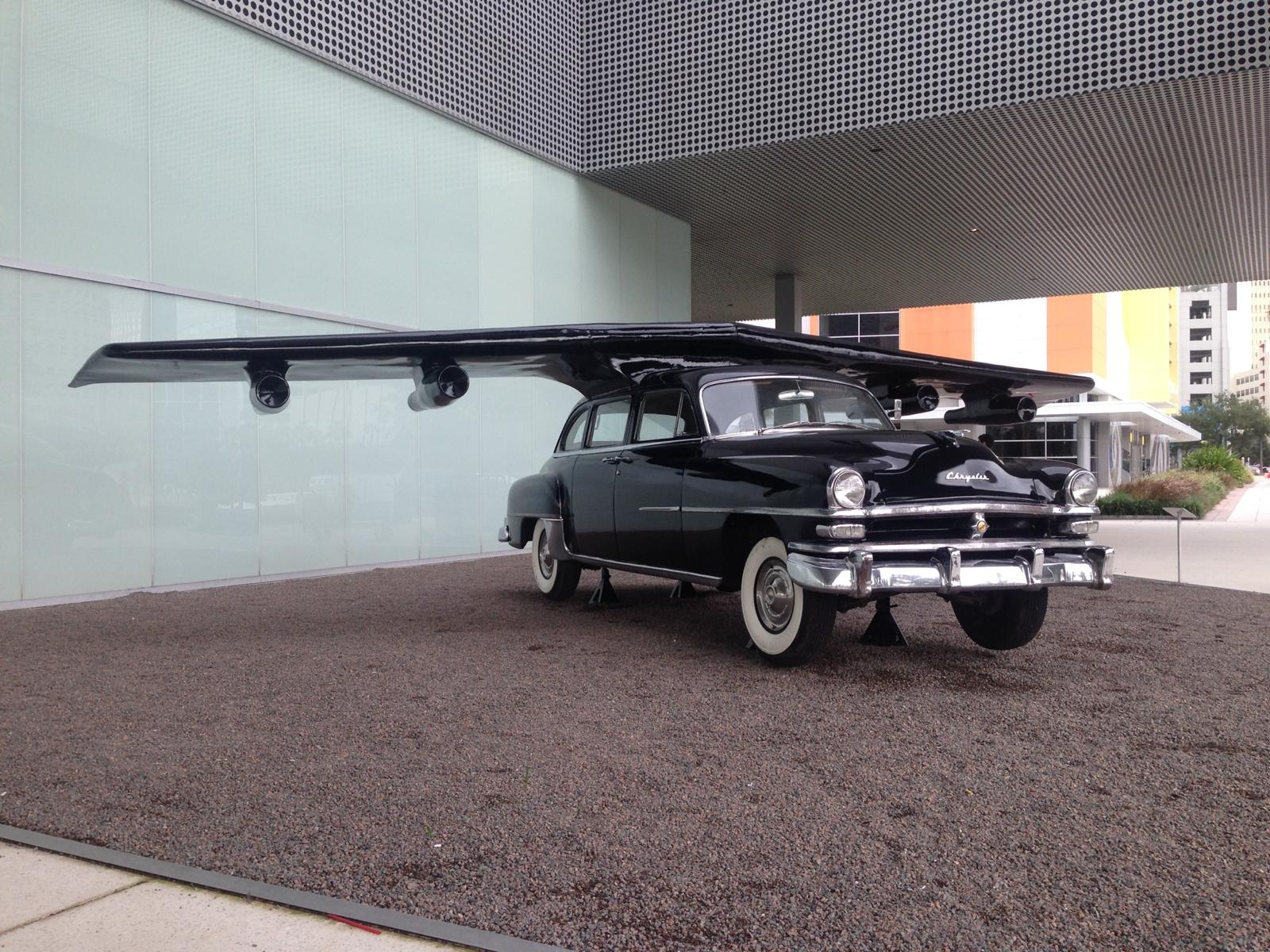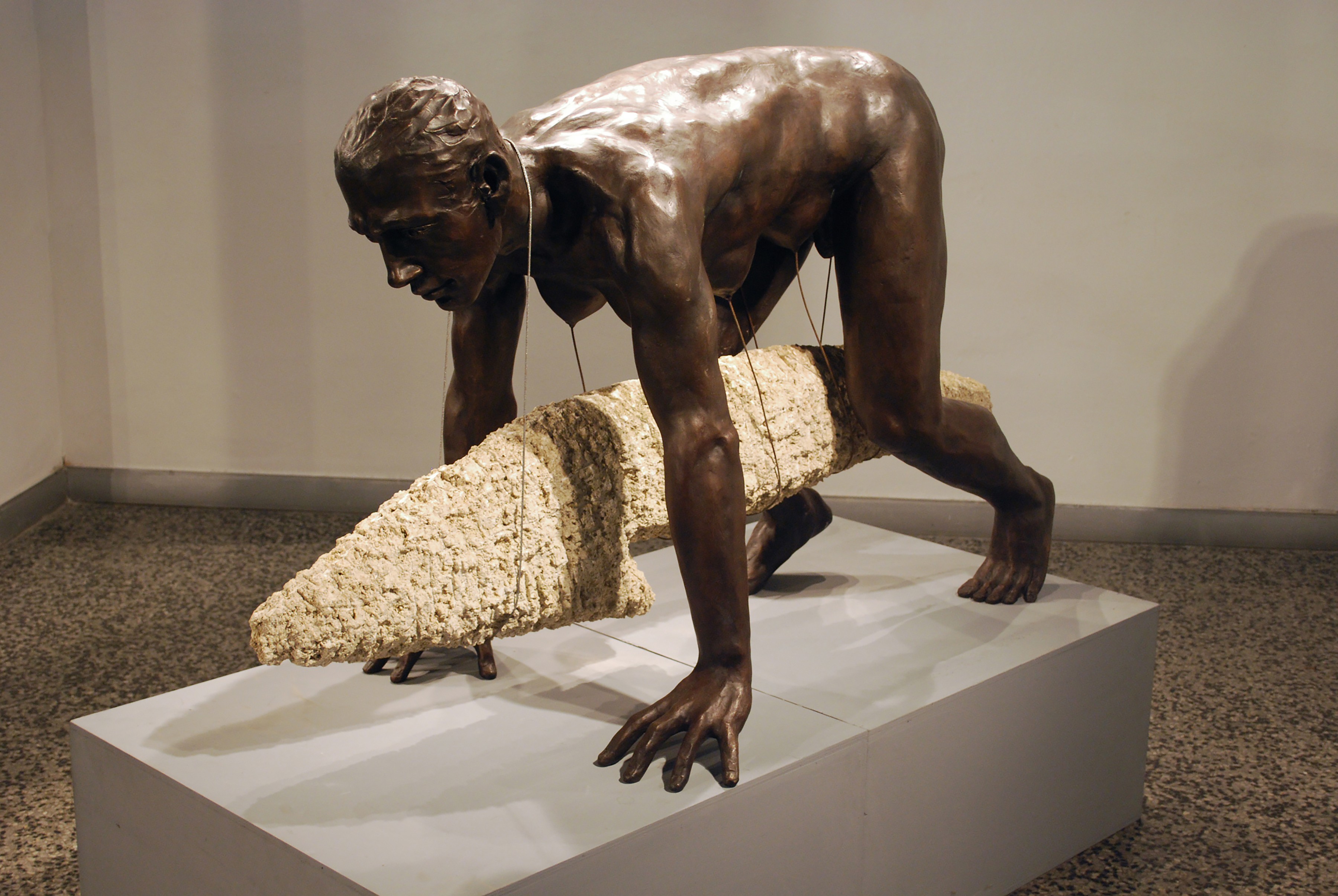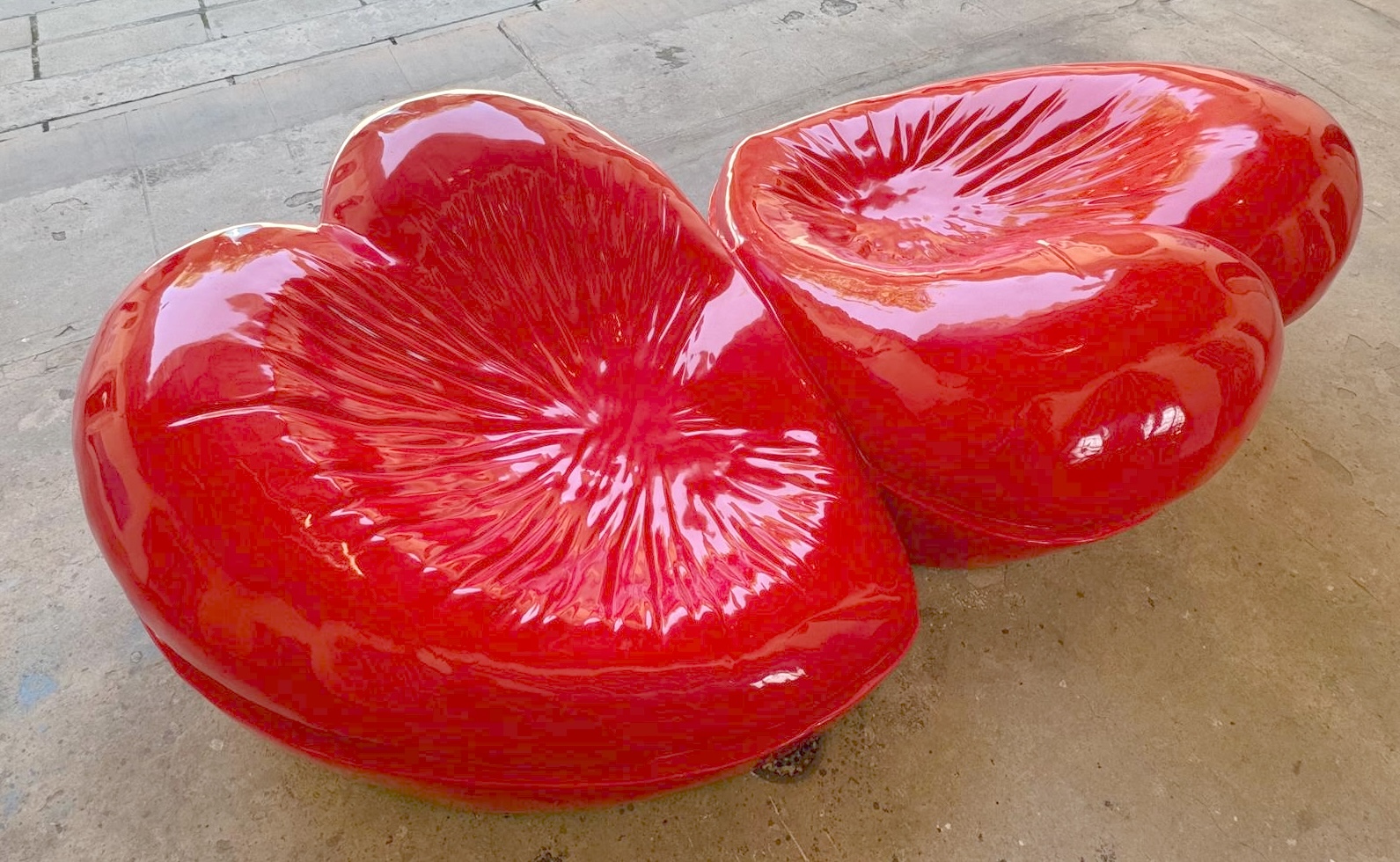
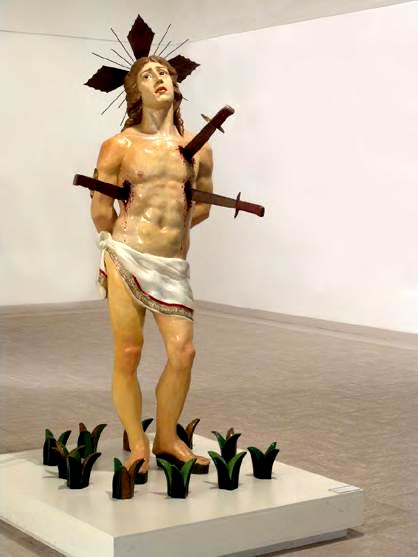
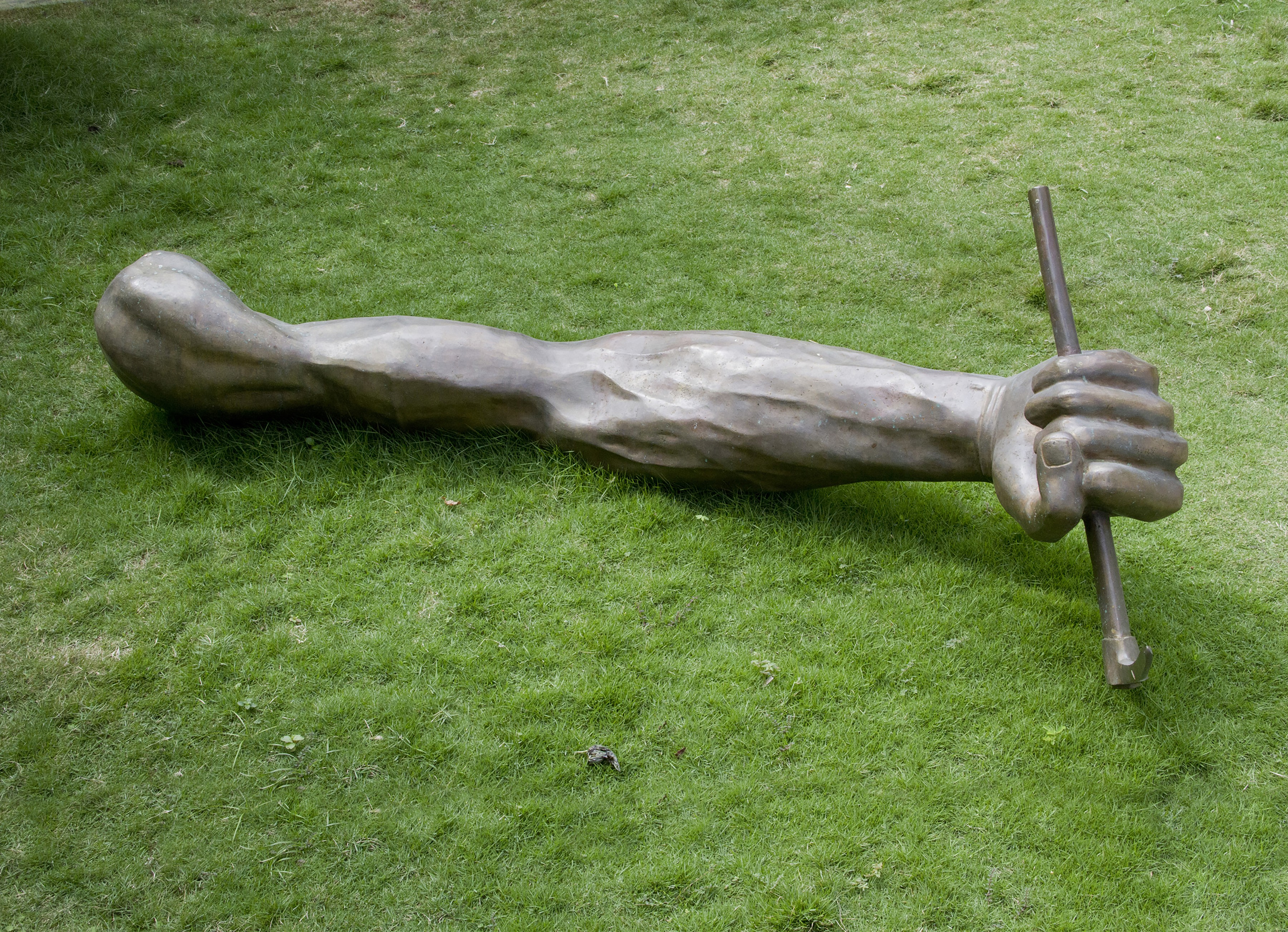
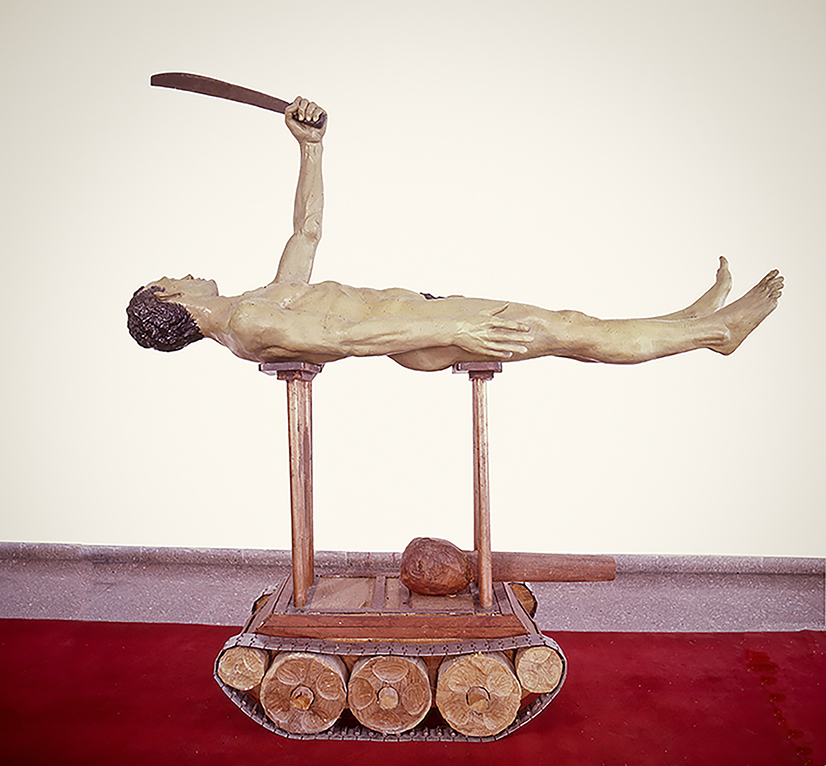
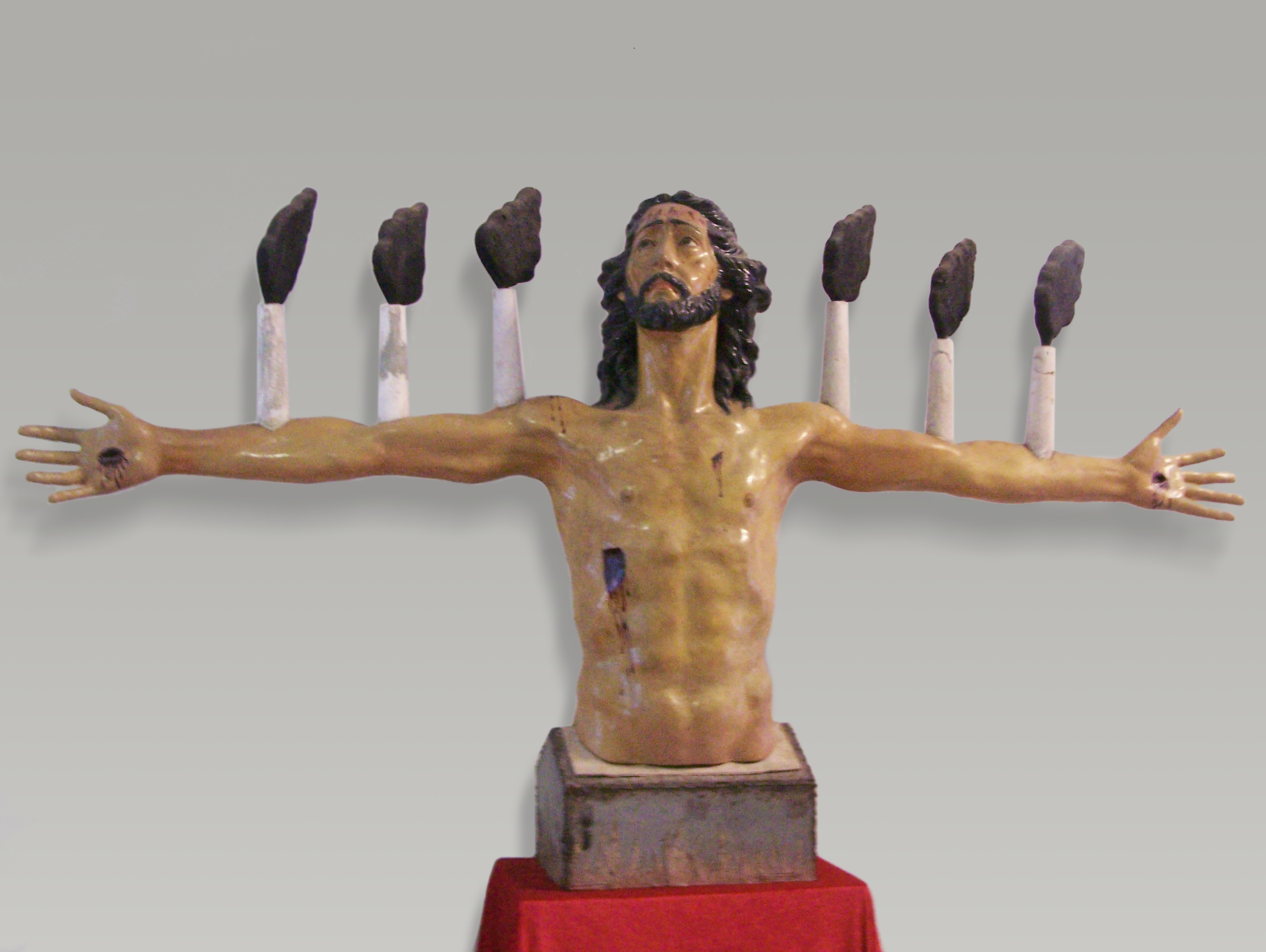
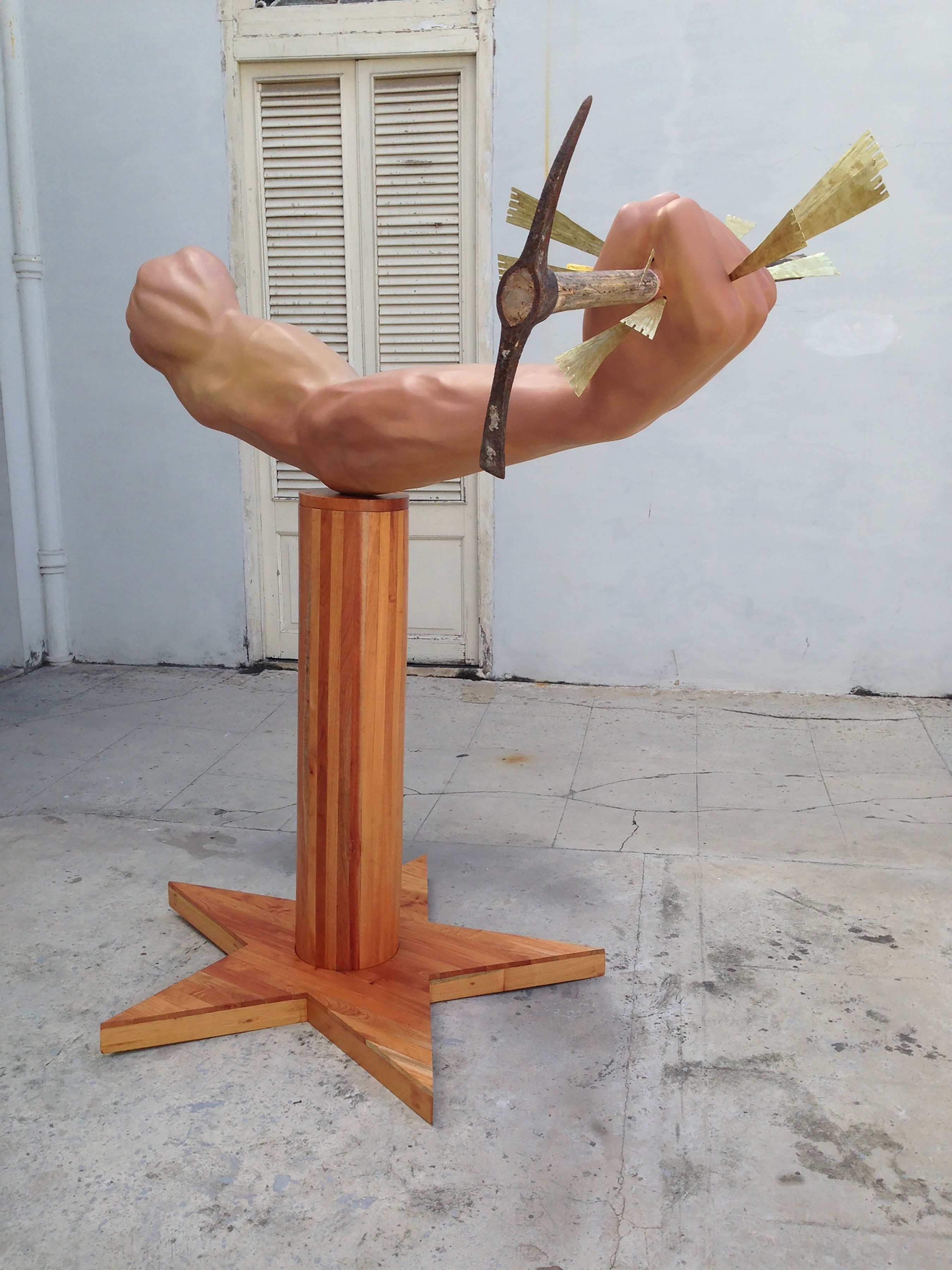
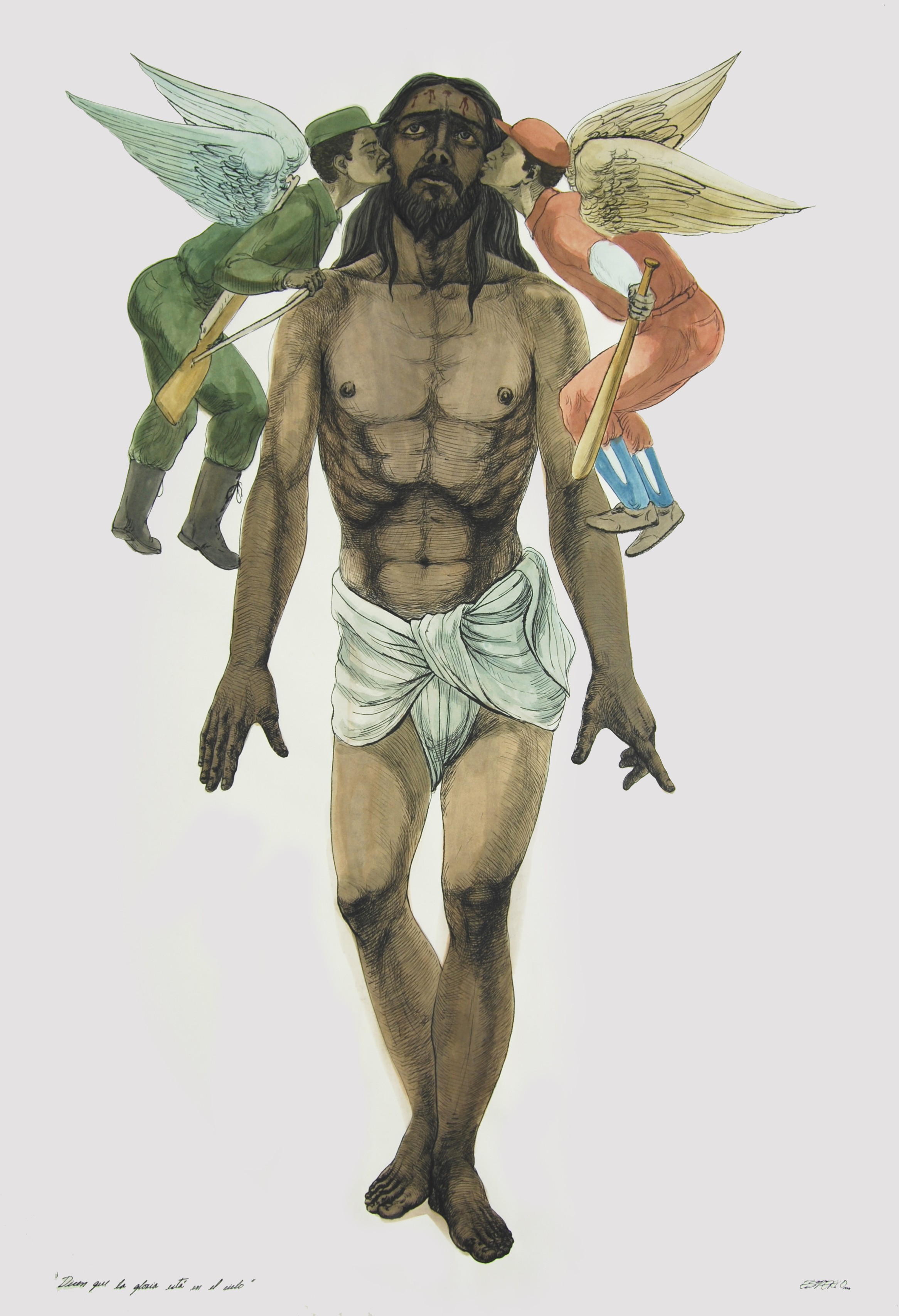
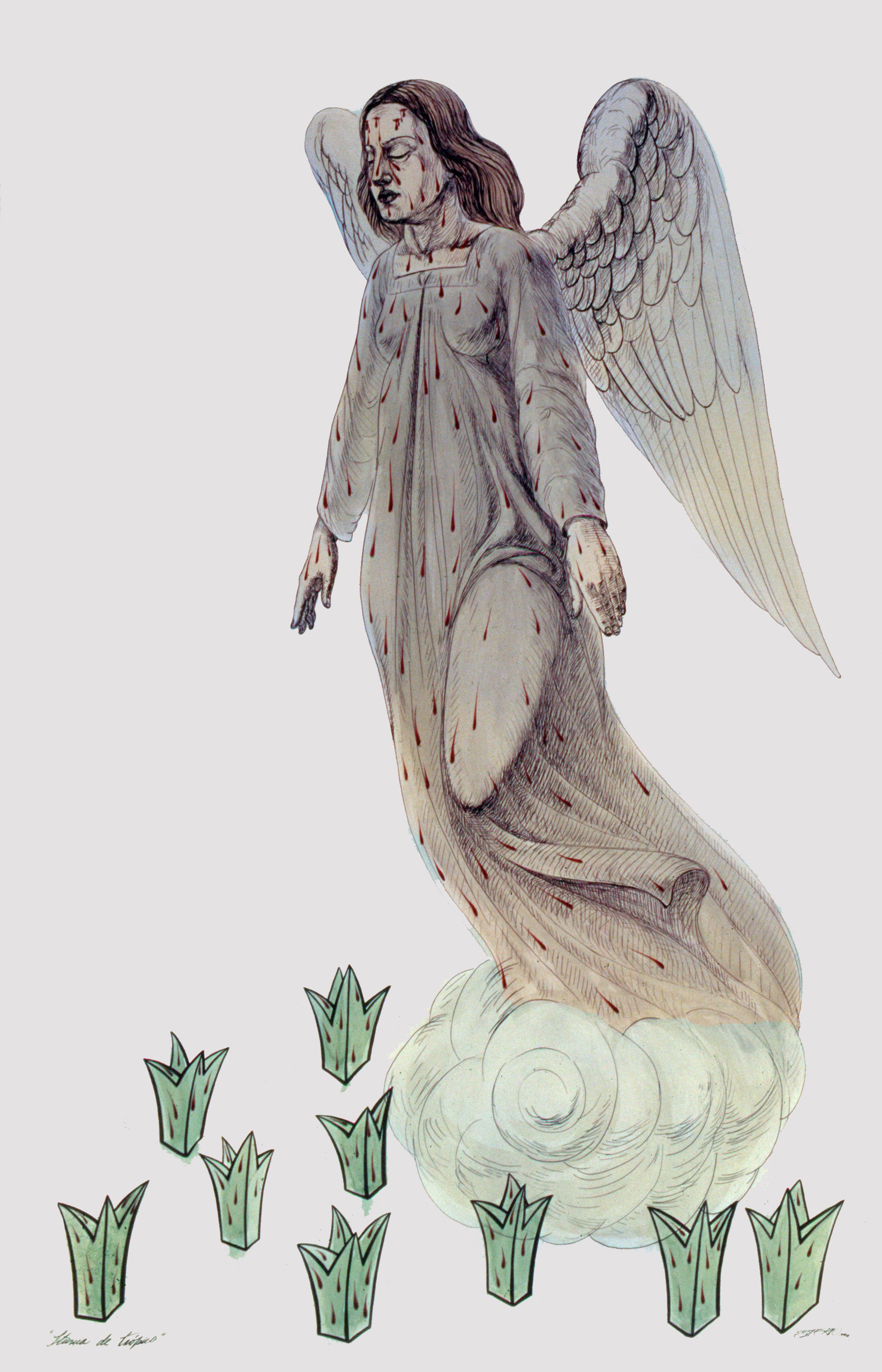
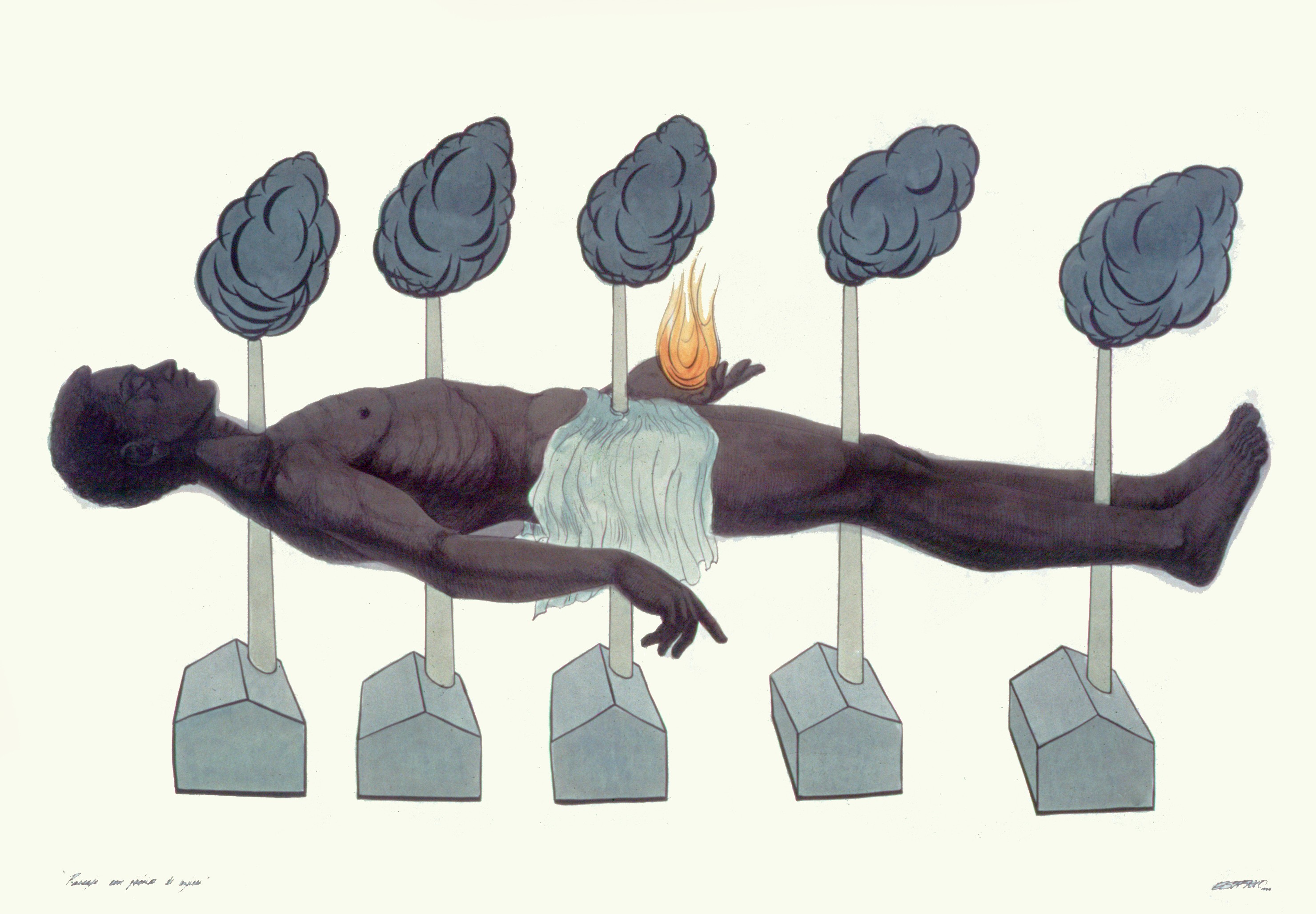
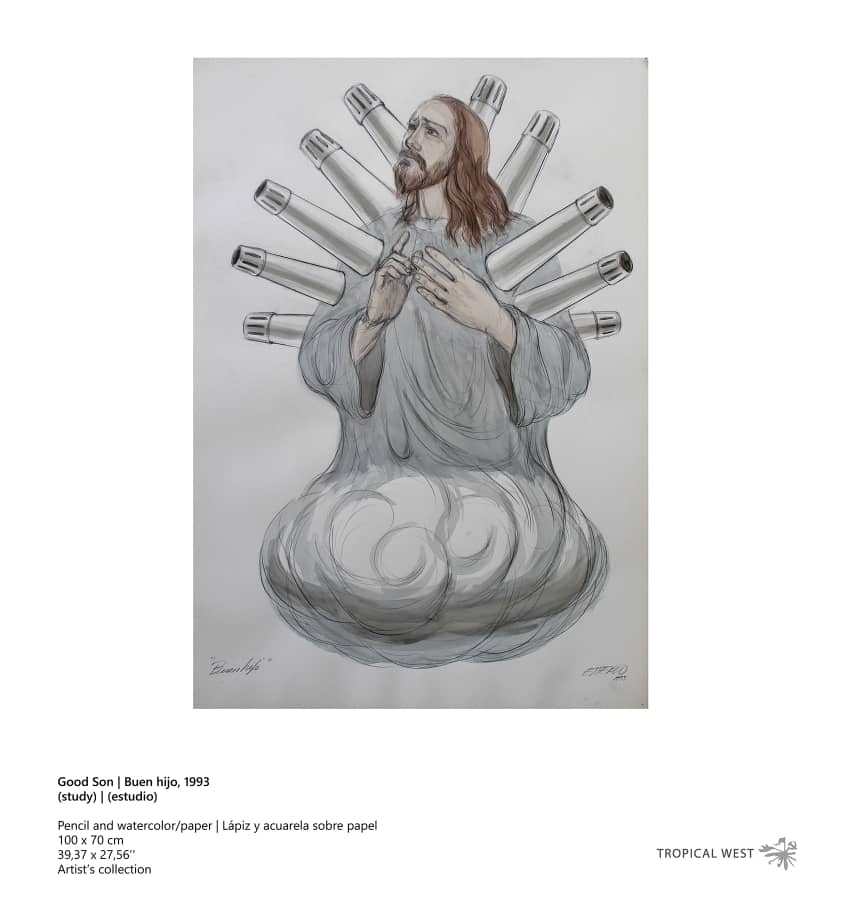
Tropical West is the first of Esterio Segura´s masterpieces, which he began in 1989 while he was a first-year college art student. From this project, he began developing the remaining 16 projects he is still working on. At the time of the emergence of Occidente Tropical, some of the artists of the time had already worked on the theme of religiosity; however, the approach to it was mostly from the African referent. It is in this representational void of the Christian imaginary and its many ramifications within Cuban visual culture that the works comprising this project are situated. The tension that arises from the interweaving of Christian elements and those belonging to the aesthetics of Socialist Realism allows a different reading of the political-social reality of the period, which tells us of a culture marked by hybridization, mixture and adaptation. The marked eclecticism of many of the pieces dialogues with dissimilar referents, which embrace in equal measure Cuban religious architecture, kitch aesthetics and the visual elements of socialist Realism. This constant mixture opens a space for debate about Cuban reality and its constant processes of transformation and cultural resistance.
The effectiveness of the pieces is based on the playful component that emerges from the contrast provoked by the incorporation of referents of different nature. The superimposition of elements of different signs does not operate from a logic of contamination from the constant addition. Still, it works from the mutual contamination from which new meanings always emerge. The convergence of religion and politics in the same art object is striking when we consider the moment in which these pieces were created: the nineties, a period in which the tension between the two spheres began to ease, even though it remained a culturally complex phenomenon.
Esterio's work can be understood as a kind of self-portrait, a record of events that he experiences or that take place in society. Everything that is adjacent to the work, what he learned before doing it or during the work process itself, serves as a tool for its completion.
_________________________
OCCIDENTE TROPICAL
Occidente Tropical es el primer proyecto de obras de Esterio Segura, iniciado en 1989, cuando cursaba su primer año en el Instituto Superior de Arte de Cuba. A partir de este proyecto, comienzan a surgir el resto de los más de 16 que continúan abiertos y en proceso hasta la actualidad. En el momento del surgimiento de Occidente Tropical, algunos de los artistas de la época ya habían trabajado la temática de la religiosidad; sin embargo, el acercamiento a esta era en su mayoría desde el referente africano. Es en este vacío representacional del imaginario cristiano y sus múltiples ramificaciones en la cultura visual cubana donde se insertan las obras que componen este proyecto. La tensión que surge a partir de la imbricación entre los elementos cristianos y los pertenecientes a la estética del Realismo socialista permite una lectura distinta de la realidad político-social del periodo, que nos habla de una cultura marcada por la hibridación, la mezcla y la adaptación. El marcado eclecticismo de muchas de las piezas dialoga con disímiles referentes, que abarcan en igual medida la arquitectura religiosa cubana, la estética kitch y los elementos visuales del realismo socialista. Esta constante mixtura abre un espacio de debate acerca de la realidad cubana y de sus constantes procesos de transformación y de resistencia cultural.
La efectividad de las piezas se sustenta en el componente lúdico que surge del contraste provocado por la incorporación de referentes de naturaleza diversa. La superposición de elementos de distintos signos no opera desde una lógica de contaminación a partir de la constante sumatoria, sino que funciona a partir de la mutua contaminación de la que siempre surgen sentidos nuevos. La convergencia en un mismo objeto de arte de los planos de religión y política resulta llamativa si tomamos en cuenta el momento en que estas piezas fueron creadas: la década del noventa, un periodo en el que la tensión entre ambas esferas comienza a distenderse, aun cuando continúa siendo un fenómeno culturalmente complejo.
La obra de Esterio puede entenderse como una suerte de autorretrato, un registro de sucesos que experimenta o que tienen lugar en la sociedad. Todo lo que es adyacente a la obra, lo aprendido antes de hacerla o durante el propio proceso de trabajo, le sirve como herramienta para su terminación.
Double-tap to zoom